Piano Concerto No.2, «Aux fins des quelques siècles»
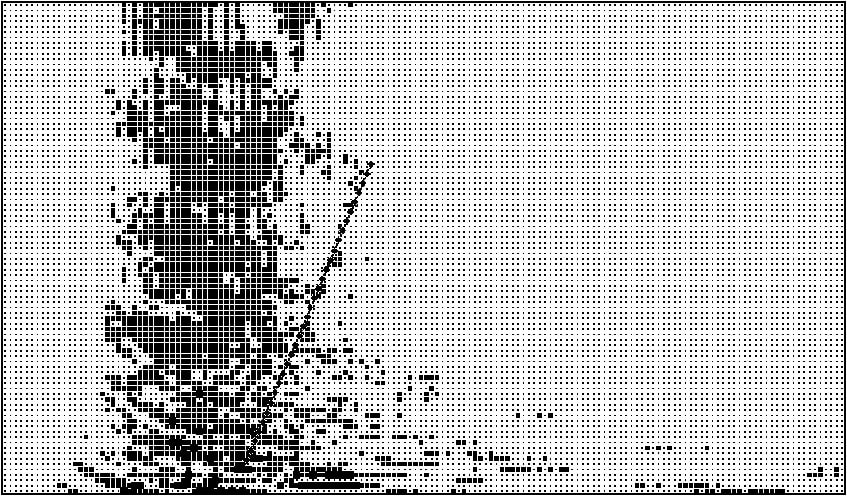
Clarence Barlow: Piano Concerto No.2 - Aux fins des quelques siècles
In 1961 aged fifteen, I began this piece as the second movement of my Piano Concerto No.1 in D, started two years earlier. When the first movement's duration reached as much as 25 minutes, I decided to give the second movement an independent existence and continued to work on it in this light. On starting the piece, my compositional style was associable with Europe of the early 1800s. By 1963 I had moved by a century to the time of Rachmaninoff's Piano Concertos, as clearly evident in the piece. However, in other pieces I concurrently wrote in the following years, my style developed further historically, emulating Bartók by 1965. I avoided the unevenness this development could have caused in the concerto by composing the piece "as my former self", lagging behind historistically to ensure stylistic homogeneity. In 1965, at nineteen, the schizophrenia of stylistic restriction here and expansion there made me put aside the completed first concerto and abandon work on the second, leaving an unfinished gap of unknown length somewhere in the second half.
Yet I continued for decades to play it to friends on the piano - commenting on how I would like to "fill the gap" some day. In 1971 I began to regard historical time, when deliberately employed, as a permissible compositional parameter. In 1975, at twenty-nine, I committed the piece for the first time to paper, thereby fixing its orchestration according what I had imagined over all the years. In 1997, when requested for a work for player piano and electronics, I finally clearly saw the road to its completion: keeping the original material practically untouched, I composed the rest - just as I had done in the sixties - out of pure inner conviction. Here I "mathematised" some of the original late-romantic material, generating music partly reminiscent of previous styles, yet fully in my unsimulated present. This piece is very much about Time: on one level it outlines the development of my own personal ability and attitudes in the course of Biographical Time. On another level, the stylistic progression from "1800" to "1900" to "2000" acknowledges Historical Time as an active compositional parameter as noted by the subtitle «Aux fins des quelques siècles». Then there is Physical Time, manifest in diverse concurrent decelerations and accelerations within an overall acceleration lasting nine minutes. The final minute of the former "gap" contains electronic sounds generated by software I specifically wrote for the purpose. My Piano Concerto No.2 was premiered as a work for player piano and electronics in April 1998 in Munich and in its own right as an orchestral work in Reykjavik in September 2002.

